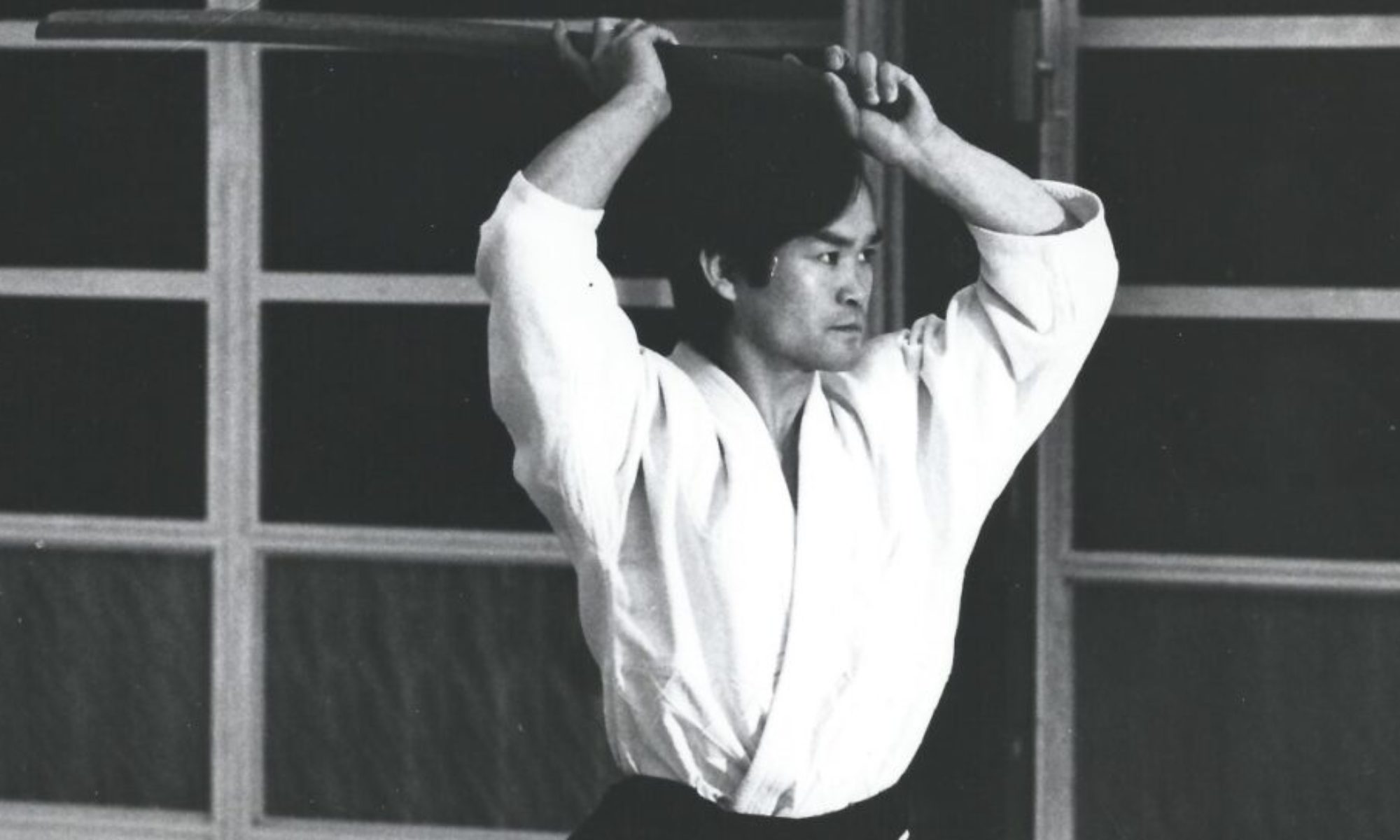
At the start of 2020, planning was well underway for Birankai Summer Camp at Hampshire College in Amherst, Massachusetts. Part of that planning included a look-back at summer camps of days past at Hampshire, a site with a rich aikido history dating back decades. To help set the scene, Birankai’s Mark Reid interviewed Sensei Kathy Stier, dojo-cho of Green River Aikido in Greenfield, (the current host dojo for this year’s camp).
Unexpectedly, in March of 2020, COVID-19 hit the world, and everything screeched to a halt. Even the best laid plans, including summer camp at Hampshire, got scrapped.
That is, until now: With summer camp at Hampshire returning this year, it’s time to revisit the interview with Sensei Stier, looking back into history and ahead for what’s to come. This has been edited for length and clarity.
How did you come to find and begin practicing aikido?
I started aikido when I was 23, in June of 1981. At that time, I was a graduate student at UMass Amherst, studying fisheries biology. I was a swimmer and regularly swam laps in the UMass pool several miles a week between classes. I was sharing an office with a few other fisheries graduate students, one being Dave Stier. Dave had been studying aikido for several years, and he told me he was practicing at a new dojo, Amherst Aikikai, where Paul Sylvain and Lorraine DiAnne were teaching. They had both recently returned from Hombu Dojo in Japan, as students of Chiba Sensei. He said I should come by and check it out. It sounded a lot more interesting than solo swimming, so I stopped by Amherst Aikikai and tried a class. After the first class, I joined and bought a gi, and started training daily. I loved it, and I was hooked.
How would you describe the main Aikido personalities and culture of the 1980s in the Northeast, especially the Connecticut River Valley?
The dojo that Paul and Lorraine created was an amazing place. They both had very different personalities, which really worked in our favor. Paul was very large and intense. His aikido was very strong, and he was often very serious on the mat. Lorraine was also very powerful, but she was generally very calm, laughed a lot, and had a unique understanding of the issues that women have during training. I often stayed after class to ask her questions, and she gave me honest feedback. In very little time, their dojo grew, and it wasn’t unusual to have 20 to 30 people in a class, mostly students in their 20s, who were eager to learn and could commit to daily practice. It was the early ‘80s, and there was still a sense of the counterculture generation. Many of us shared the common desire to eat organic and healthier, and we’d grow vegetable gardens and bring any extras to the dojo or exchange a new vegetarian recipe. There was a co-op in Amherst where we’d buy our cheese, rice, nuts and dried fruit in bulk, usually in paper bags. I think most of us were barely getting by on our meager salaries; we didn’t have much but didn’t need much either. There was a real community feel to our dojo. Many times, we got together for a cookout or grabbed a beer after class. The social aspect was embedded in our routine but also helped our aikido. We’d listen to stories from Paul and Lorraine about learning from Chiba Sensei and what it was like to live in Japan. Paul was an excellent cook, and he invited us over for dinners, as well. There was also an appreciation for music, especially jazz. It seemed that aikido went well with fine music and cuisine, and being in my early 20s, I hadn’t been exposed to much of this, so it was all an important part of my personal growth. Things changed, though, as many of us grew older, and started families, making daily training a real challenge. We worked hard to keep up.
Please explain the origins of Birankai’s relationship with Hampshire College.
Before Birankai, Chiba Sensei, Yamada Sensei and Kanai Sensei were the three main USAF shihan who regularly attended summer camps at Hampshire College from 1979 to 1984. When I joined Amherst Aikikai in 1981, our teachers, Paul and Lorraine, had just opened their own dojo in Amherst, which is just a mile away from Hampshire College. This was the same year that Chiba Sensei opened up his dojo in San Diego and became the leader of the Western region of USAF. Chiba Sensei came to Amherst Aikikai every year but also taught at Kanai Sensei and Yamada Sensei’s dojos. We were fortunate to see all of their style differences and interpretations of O’Sensei’s aikido. Paul and Lorraine also traveled to San Diego to see Chiba Sensei and returned with new ideas to share with us. They were committed to him, as they were members of his private class (along with Didier Boyet and Bruce Bookman) at Hombu in the 1970s but maintained strong ties with Kanai Sensei and Yamada Sensei. As students, we helped with many of the summer camp details. Dave and I borrowed the UMass fisheries boats to take Chiba Sensei and Paul fishing during his visits. In 1996, after Paul died in a car crash, Chiba, Kanai and Yamada Senseis all came to Hampshire College for a memorial seminar, where Paul was awarded the title of shihan, the first American to be granted this title. Three years later, the last Hampshire College summer camp was held there. Our little dojo, Amherst Aikikai, really was a hub for making an impact in the aikido world. Aikido was truly the start of a life-long journey for so many of us, and I feel like they did an amazing job preparing us. They ended up producing a lot of great aikidoists who are now all around the United States. Several are shihan with their own dojos: Dave Stier, Phil Traunstein, Benjamin Pincus, Ray Farinato, Larry Levitt, Julia Freedgood; and shidoins: Manolo San Miguel, Suzane Van Amburgh, myself, Tom Grimaldi, Jim Hauer, Malory Graham, Bill Marsh, Michael Cevasco, Claire Keller, Jason Pfol. To me, this was not a coincidence but truly something special.
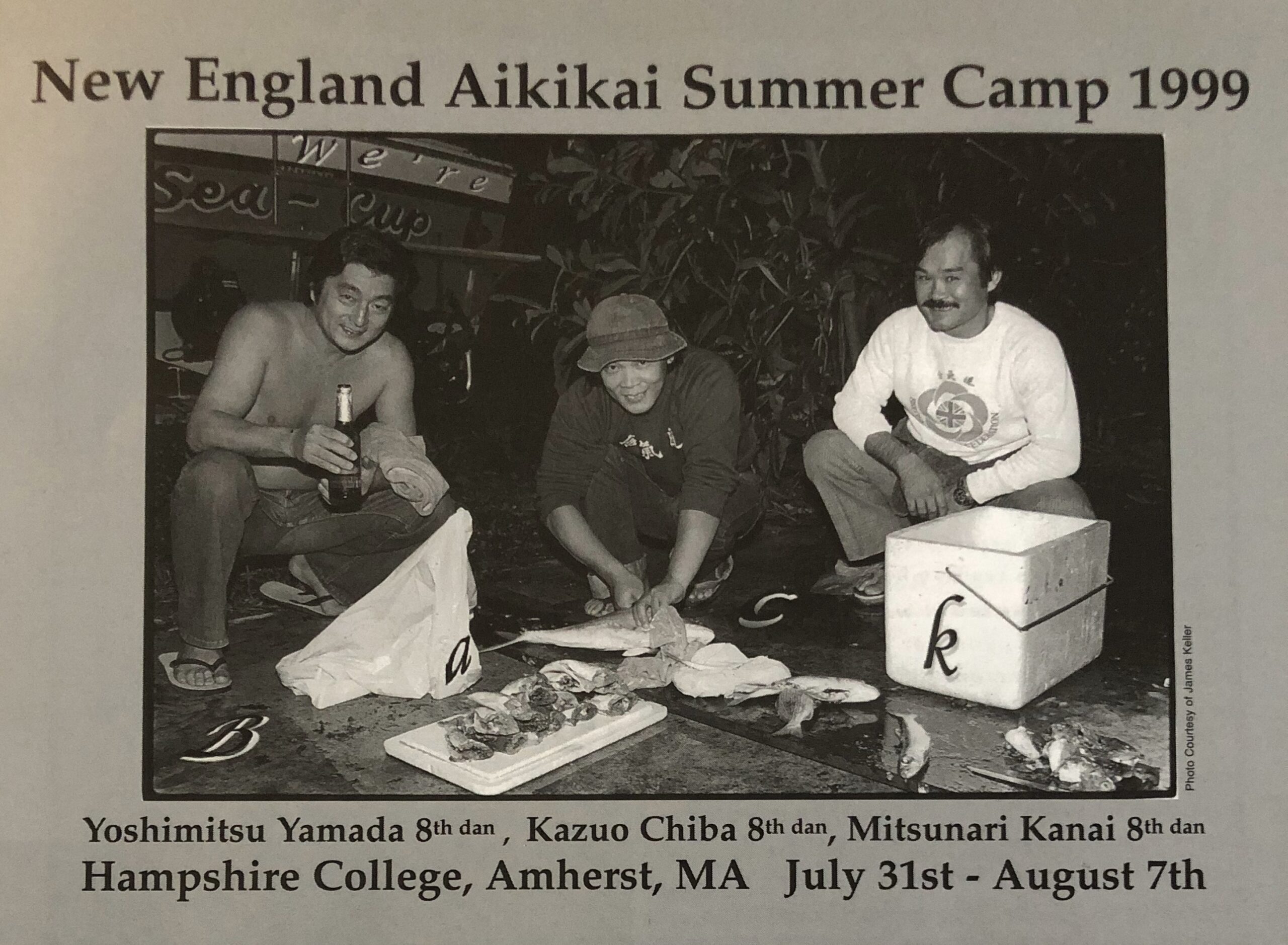
How, in any way, was the relationship between Chiba Sensei, Kanai Sensei, and Yamada Sensei and their students instructive to our current aikido ecosystem?
Because all three shihan came together during seminars and USAF summer camps, their students hung out together between and after practicing, which helped create close relationships throughout the U.S. I remember a few baseball games at Hampshire College where all three senseis played. Chiba Sensei could bat the ball equally well with either side. He took the game more seriously than Kanai and Yamada Senseis; he did not want to lose. At night, they’d often tell stories about learning from O’ Sensei, which you could tell made them very proud. We also had talent shows and sometimes got them laughing so hard. Being with students from all three shihans’ dojos and training together helped to build lifetime friendships and support each other in years to come.
In addition to good training and camaraderie, what do you hope attendees at this year’s summer camp take with them?
For some of the older practitioners (like myself), I’m guessing many will remember those special times at Hampshire College with all three shihan. This year will mark 11 years since Chiba Sensei’s passing. I know he enjoyed coming to Amherst to see Paul and Lorraine and to teach at Hampshire College. It will be 30 years since the passing of Paul. We are hoping it will spark a reunion of many of the people in the area whose lives he touched, which makes it very fitting to have Birankai summer camp here. In fact, Paul and Julia (Freedgood) had their wedding reception at the Red Barn, where we will have our end of camp celebration. Also, I believe the younger students will appreciate the location being close to town. The Pioneer Valley itself is very beautiful, with some breathtaking views of the Holyoke Mountain Range, which is what Max Traunstein has captured on this year’s summer camp poster. Amherst and Northampton are bustling with excellent restaurants, cafes and brew pubs. There is a bike path that connects both towns. There are some interesting museums nearby, as well, and plenty of outdoors for exploring. Western Massachusetts is very different from the Boston area, which is where most people gravitate to when they travel to New England. It is certainly worth taking an extra day to check it all out.
Editor’s note: scholarships to summer camp are available. The deadline to apply is March 31st. The link to the online application form is available on the Birankai Summer Camp website. https://camp.birankai.org/
What a great interview, and so rich in history. Great prelude to what is looking like a fantastic camp.
Thanks Todd, I stumbled upon it as I was going through camp files on my computer. We are excited to have it here and hopefully a good turnout! Hope you’re doing well