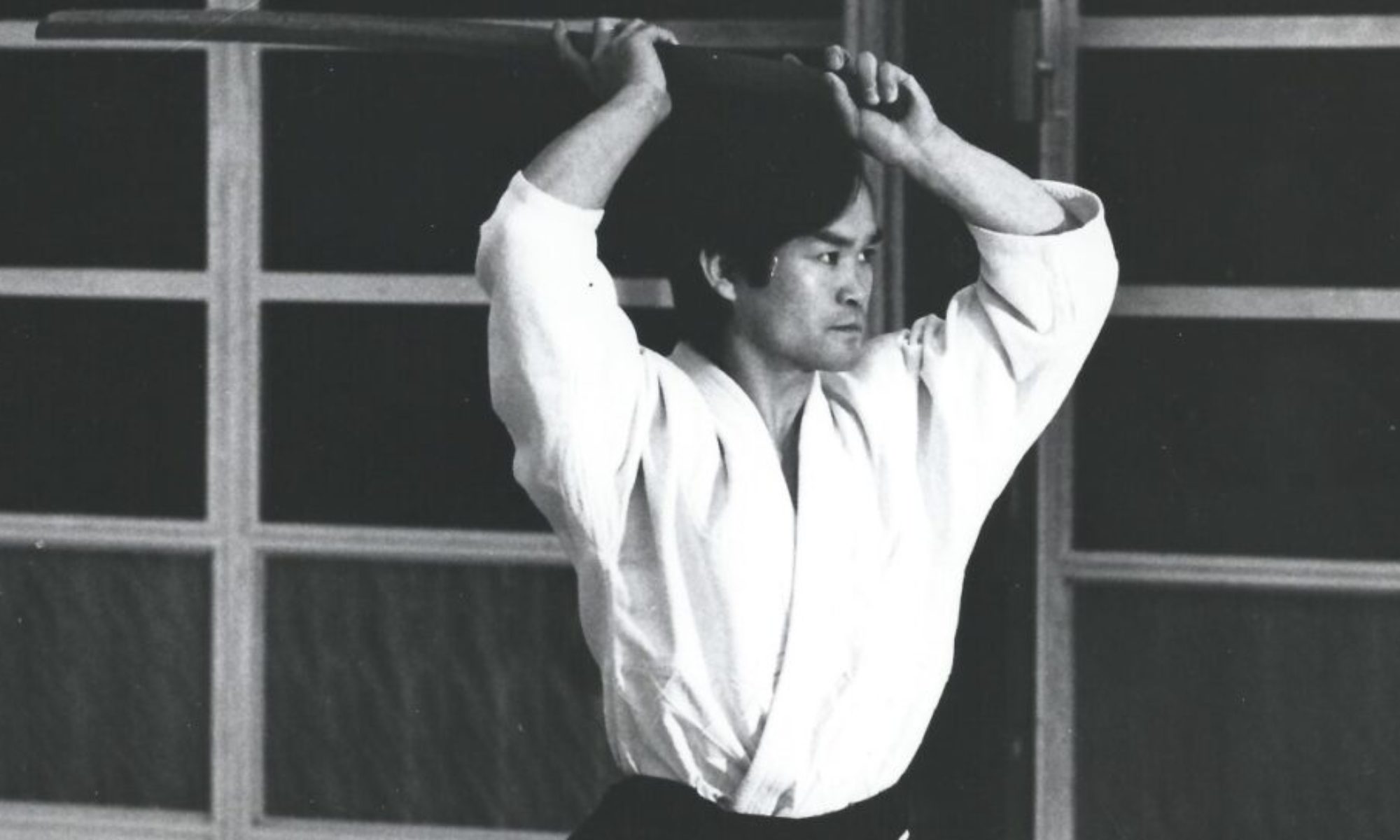
Deborah Fisher, Ithaca Aikikai
This is a story about learning how to teach.
I’ve taught aikido for four years, and in that time a big handful of guys have come through my dojo who are surprised that I am emphasizing ukemi so much. They all had some aikido experience, maybe watched videos of Chiba Sensei, and expected something different. They tell me that this is like dancing.
Of course, they also resist and leave themselves open, so I tried just hitting them when they did that. Unfortunately, though, every single time I have hit a student on the mat without warning them first, it has made them quit immediately. I am surprised by this—who quits a martial art because they got hit? But we are living in a more fragile time than when I started doing aikido, and I feel like I have to accept that if I want to run a dojo now. Hitting is no longer the first tool I choose.
I decided to explain why I was hitting folks first, and among these guys, explaining turned into a lot more conversations about what constitutes “good aikido” or a “real martial art” than is probably wise. And if teaching students to just take the ukemi instead of stand there the way I was taught put me in a conflict with the zeitgeist, these conversations brought out something I needed to work on personally. A long theoretical conversation is just the student’s ego resisting learning something new. And I tend to empathize with this resistance so much that my own ego attaches to it. I learned a different style of ukemi first, too. I found learning the ukemi that I am teaching now perplexing, and I wasted a lot of time judging it. I found this deep backbend thing terrifying. I could not imagine wanting to be that vulnerable to Yamada Sensei or anybody else at the New York Aikikai. So, instead of seeing the resistance and holding the expectation, my ego met a couple of students’ egos in another kind of dance—the student’s ego dancing away from learning, with my ego chasing behind them, more or less falsely offering that they could borrow shoshin that I had no right or ability to give them.
What my own teacher would say about all this is that you can’t teach the aikido you want to teach to everybody—you have to find your people. And it’s true that I have not been locked in a cycle of endless resistance. One of these guys is more like my people, and he came at a moment when I am a little more aware of my own ego’s capacity to try to protect students from the hard work of setting aside what they know. It turns out that working with your people is still hard, incremental work! But the breakthroughs, incremental as they may be, actually break through to someplace.
One quiet Wednesday night around the end of the semester, Jeff was the only person in class and he was doing what he always does—probably opening his entire chest and groin to me and then parking himself there. And I was doing what I always do, probably kneeing him in the chest and saying something like “Come on, there is nothing martial about giving me your entire chest and then resisting like that. The only way you could come up with that idea is if you think you have nothing at risk. Do you need me to hurt you more?” And even though we’ve played out this script hundreds of times, this time he began to move. For the next few minutes he was where he needed to be, when he needed to be there. Supple and connected. He showed me what he is capable of, instead of his resistance.
After a while, of course, the resistance came back, just like it always does for me when I am in Jeff’s shoes! I get that now my job is to hold those precious moments of ease and connection that he is capable of in trust, treat them as the new standard, and keep the faith that he can get there again.
After class, we had a conversation about this experience, and I can’t replicate it, but he was working incrementally and sincerely through the same “it’s like dancing” resistance that comes up all the time. Instead of that lame theoretical discourse that a bruised ego spits out, a space opened up in which Jeff was feeling his way through actually being able to see the promise of what we are doing here. Of course it is more “dancelike,” as well as more martial, to move so that someone doesn’t hurt you than it is to stand there and not explore all the ways in which someone might hurt you, as you wait for them to hurt you in the way that was just demonstrated. Of course this “dancing” is more interesting than whatever we think a conflict or a martial art or being tough or winning is supposed to be about. Of course it is a good idea to “dance” instead of resist in other types of conflict as well.
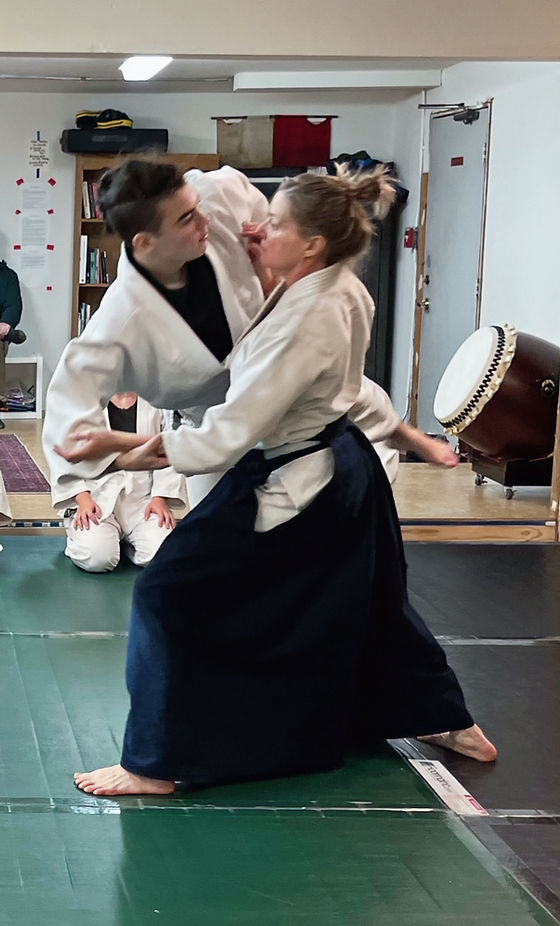
<3!